July 6 – 10, 2026, Le Climont, France
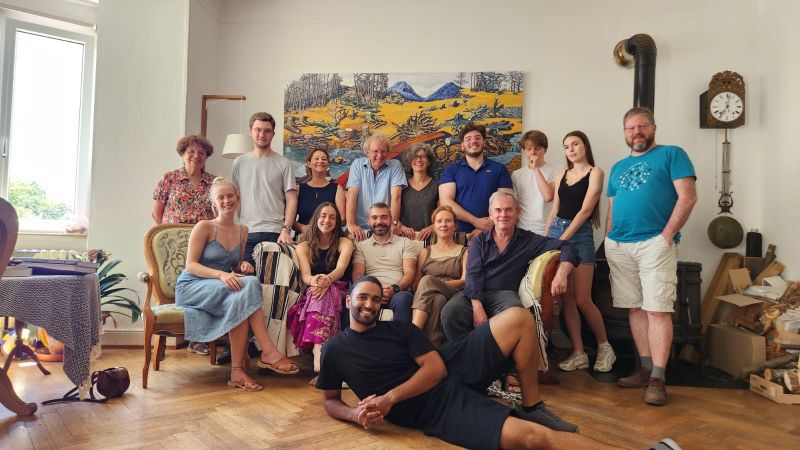
Our story / Notre histoire
Stories at war :
How narratives create conflict and cohesion
« Stories are the means by which we navigate the world. They allow us to interpret complex and contradictory signals, creating meaning out of chaos. «
George Montbiot and Peter Hutchison – The invisible doctrine
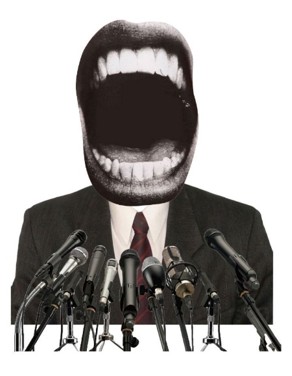
During this Summer School, we will look how stories are told and how they structure our vision of the world.
We will explore the possibility of telling other stories then those who want to create conflict, fear and mistrust.
We will search for stories of cohesion, confidence and cooperation, in order to find inspiration to shape our own stories.
The Summer School takes place in Alsace (France), a region which suffered from the two World Wars. It is more than symbolic that the Council of Europe and the European Parliament have chosen their headquarters in Strasbourg.
The Summer School offers a special opportunity for young adults to meet participants from all over Europe and the Middle East.
We have two places left. You can still send us your pre-registration form :
Monday, July 6: We Are Creatures of Narrative
17:00 – Arrivals
Presentations of the program and of our personal histories.
We will take our first steps into the world of narratives. We will explore the distinctions between the concepts of narratives, stories, visions, histories, and plots.
With his novel 1984 (published in 1949), George Orwell depicted a totalitarian society. We will examine closely these Orwellian mechanisms still at work today, facilitating narratives of conflict and destruction: Newspeak, doublethink, and the mutability of the past.
Speaker:
- Chris Doude van Troostwijk – Professor of Philosophy at the Luxembourg School of Religion and Society
Tuesday, July 7 : Talking About Europe: Stories from the Inside and the Outside
The continent we call Europe is named after Europa, a figure from Greek mythology. Yet Europa was neither Greek nor European; she was Phoenician, a people from the region we now know as Lebanon and coastal Syria.
Europe is a prime example of storytelling. What do we mean when we talk about Europe? Geographically? Politically? Does Europe have a soul, or does it only count its economic value? Is Europe a fortress, or a place of hospitality and cooperation with those outside its borders? Which story would we like to tell?
Our two speakers will provide a historical overview of European integration and the European federalist movements, as well as the European Union’s struggle to establish its legitimacy through new narratives.
Speakers:
- Louis Ritter : historian and engaged in the movement of the Young Europeans.
- Camille Nessel: Lecturer in Political Science at the Free University of Brussels (ULB) and specialist in the perception of Europe and Oriental Studies.
Film Screening: The Invisible Doctrine by George Monbiot and Peter Hutchison
Wednesday, July 8: Imagine
For change to happen, we need to know where we come from and where we go to. We need a vision; otherwise, we sink into a morass of small details and day-to-day solutions, condemned to fail. We will work with Jean-Pierre Michel on the importance of knowing whats makes us wanting to get up in the morning and try to formulate our own vision.
Speaker:
- Jean-Pierre Michel: Former Director of Human Resources at the Directorate-General of the European Commission’s Joint Research Centre (JRC) in Brussels.
Afternoon: Stories of Resistance and Manipulation
- Visit of Haut-Koenigsbourg Castle: Erected in the 12th century, the castle has witnessed centuries of conflicts and rivalries between lords, kings, and emperors. The renovation of the castle in the early 20th century was used as a symbol by the German Empire to legitimize the annexation of Alsace – an example of how history was rewritten to justify the German Emperor’s narrative.
- Visit of the Pulvermühle: We will hear the story of this unique farm. In 1965, Freddy Schmidt was poisoned by a pesticide while treating his orchard. This led him to re-evaluate his approach and decide to turn to a cleaner form of farming aligned with his values, which was still in its infancy: organic farming. He faced many difficulties but persevered, playing a key role in popularizing and promoting a method that respects both nature and people.
Speaker:
- Dany Schmidt – son of Freddy Schmidt and organic farmer
Thursday, July 9: How to Stay Together?
There is too little time, and the task of changing the system seems too big. People aren’t ready for it… We can feel desperate when we hear such sentences. Yet, in the past, we have seen that systemic change is possible: sudden, sweeping transformations have occurred, though they seemed unimaginable shortly before they happened.
Together with our guest speaker, we will hold a Zoom exchange with the Rossing Center in Jerusalem. The Rossing Center for Education and Dialogue is an interreligious organization promoting an inclusive society for all religious, ethnic, and national groups in the Holy Land. We will listen to how the war that began in October 2023 continues to shape daily life. In such an atmosphere, the Rossing Center’s work is more difficult and more necessary than ever. We will ask them what narratives inspire them to persevere and keep their commitment alive. When everything falls apart, how can we create common stories to carry on?
With Isabelle Marx and Richard Doust we will work on the stories we would like to tell and train our voices and speeches to present them with confidence in english.
Speakers:
- Matthieu Bush – Director of the association Christian Action in the Middle-East (ACO)
- Reuven Hanan Adva – Resource Development and coordinator of the Rossing Center
- Richard Doust – an Englishman living in Strasbourg, actor and musician. He uses and trains the power of storytelling.
- Isabelle Marx – Socially engaged artist and trainer in spoken and sung voice, as well as non-violent communication.
- Sara Wazwaz – Communication officer of Sabeel
Friday, July 10: Let’s Share Our Stories!
We will share our stories and visions we worked on during the Summerschool.
Departures after lunch
Call for Applications
The Summer School invites young adults (aged 18 to 30) to apply. There will be 15 places available. We aim to create a group with participants from diverse backgrounds: interfaith, international, from Europe and the Middle East, with different areas of interest: politics, economics, arts, philosophy, humanities, law, ecology, and more.
Join us for the 2026 Summer School!
Language: English
Full Board: €60 (excluding travel expenses). Please contact us if the contribution fee is a problem.
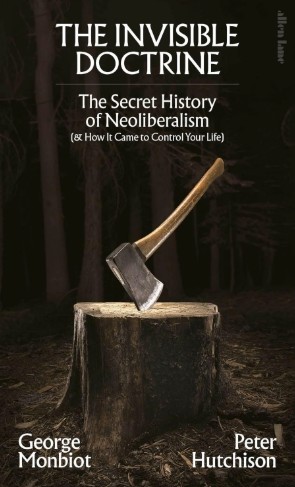
In our research we discovered the book and film « The invisible doctrine » George Monbiot wrote with Peter Hutchison.
We were much inspired by the way they described the importance of telling stories. That it is possible to invent new ones which can help us to find a way out. That humans are able of altruism. That we can reinvest communities and democracy and politics in a way that prevents the Earth systems to collapse. That change is possible even if the task seems too big.

